
Painting Without Paintbrushes: 15 Fun Tools to Try
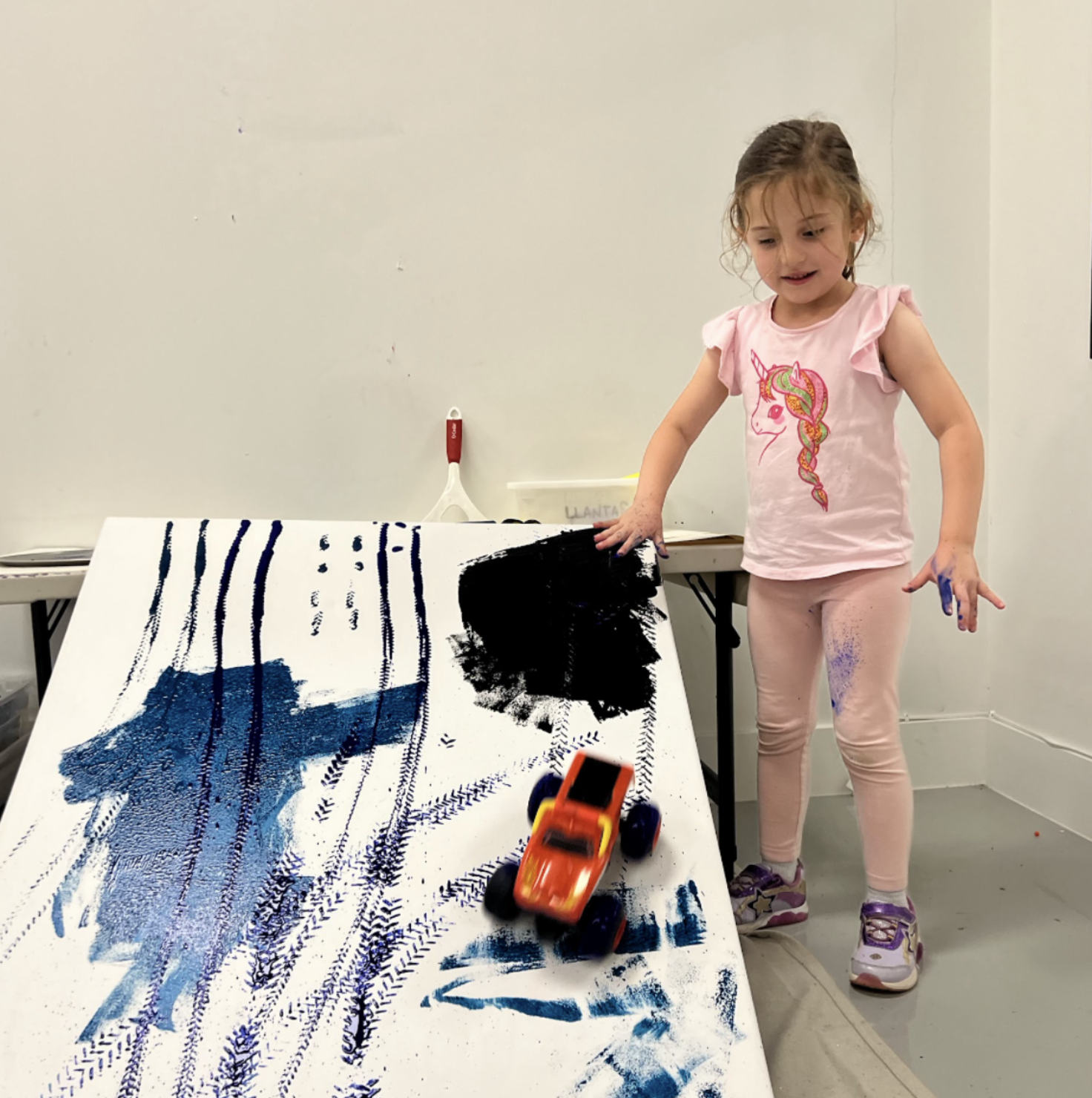
Who says you need a paintbrush to make beautiful art?
One of the things we love most at MakeArt is encouraging children to explore materials in new and unexpected ways. Painting with everyday objects sparks curiosity, builds creativity, and reminds children that there isn't just one "right" way to create.
When we replace paintbrushes with different tools, children naturally experiment with texture, movement, and cause-and-effect. Every mark becomes a discovery!
Here are some of our favorite tools to try at home.
1. Toy Cars
This is one of our all-time favorite painting activities!
Pour a few colors of washable paint onto a large sheet of paper or a tray. Let your child drive toy cars through the paint and across the paper, creating colorful tire tracks, swirls, and patterns.
Try using:
Monster trucks
Race cars
Construction vehicles
Toy tractors
Each vehicle creates its own unique print.
2. Forks
Plastic forks make amazing textures. Drag them through wet paint to create grass, hair, feathers, or abstract patterns.
3. Kitchen Sponges
Cut sponges into different shapes or simply dip them into paint for fun stamping and printing.
4. Bubble Wrap
Press bubble wrap into paint and stamp it onto paper for a fun textured effect.
5. Cardboard Tubes
Toilet paper or paper towel rolls can be stamped, squished into flower shapes, or rolled through paint.
6. Nature Treasures
Leaves, pinecones, sticks, flowers, feathers, and even small branches all make wonderful painting tools.
7. Cotton Balls
Clip a cotton ball with a clothespin to make a simple paint dabber that's perfect for younger artists.
8. LEGO® Bricks
Dip the bottom of LEGO bricks into paint to create fun geometric prints and repeating patterns.
9. Cookie Cutters
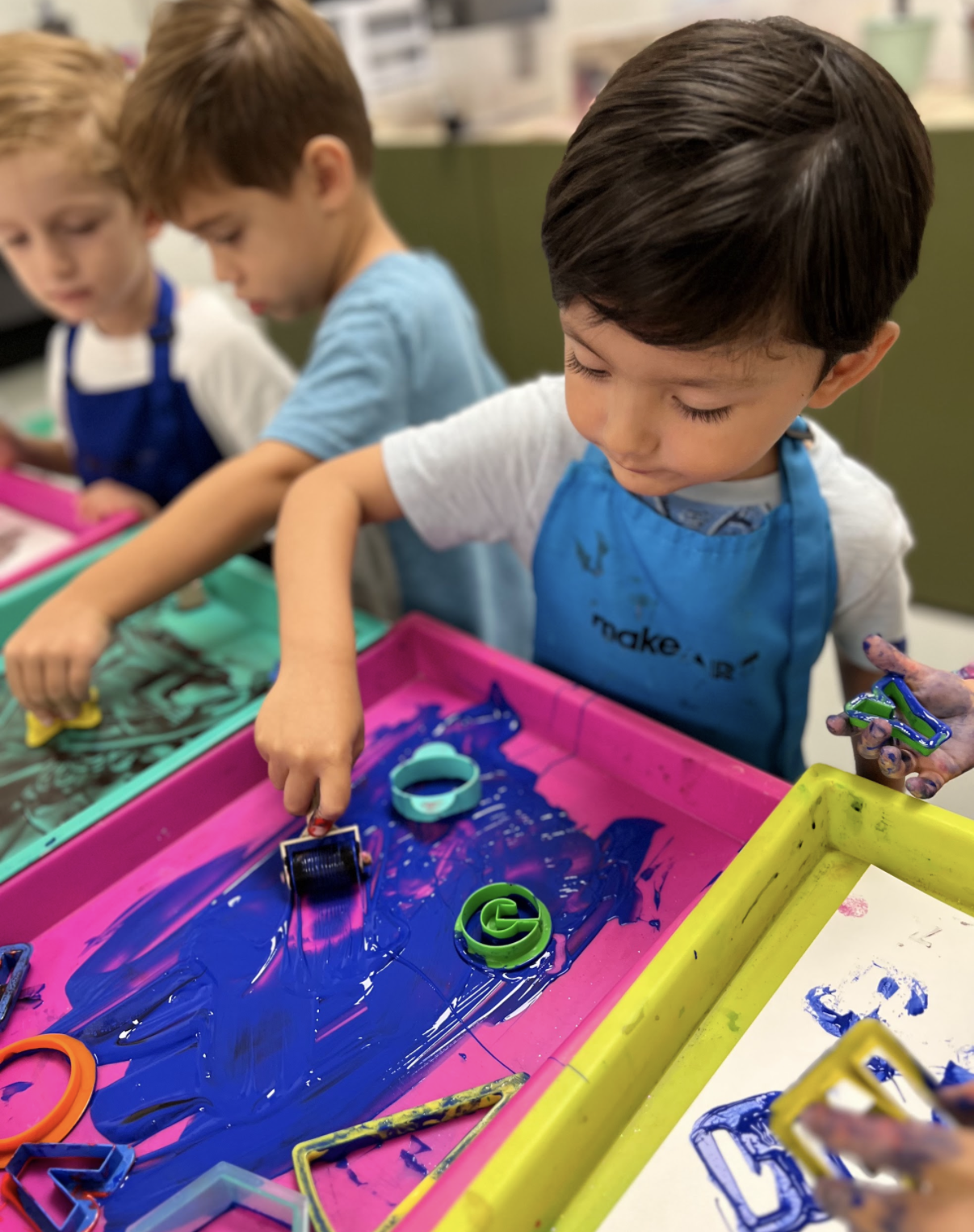
Use metal or plastic cookie cutters as stamps to make colorful shapes.
This are our favorite ones!
10. Toy Animals
The feet of plastic dinosaurs or farm animals leave interesting tracks when dipped lightly in paint.
11. Kitchen Tools
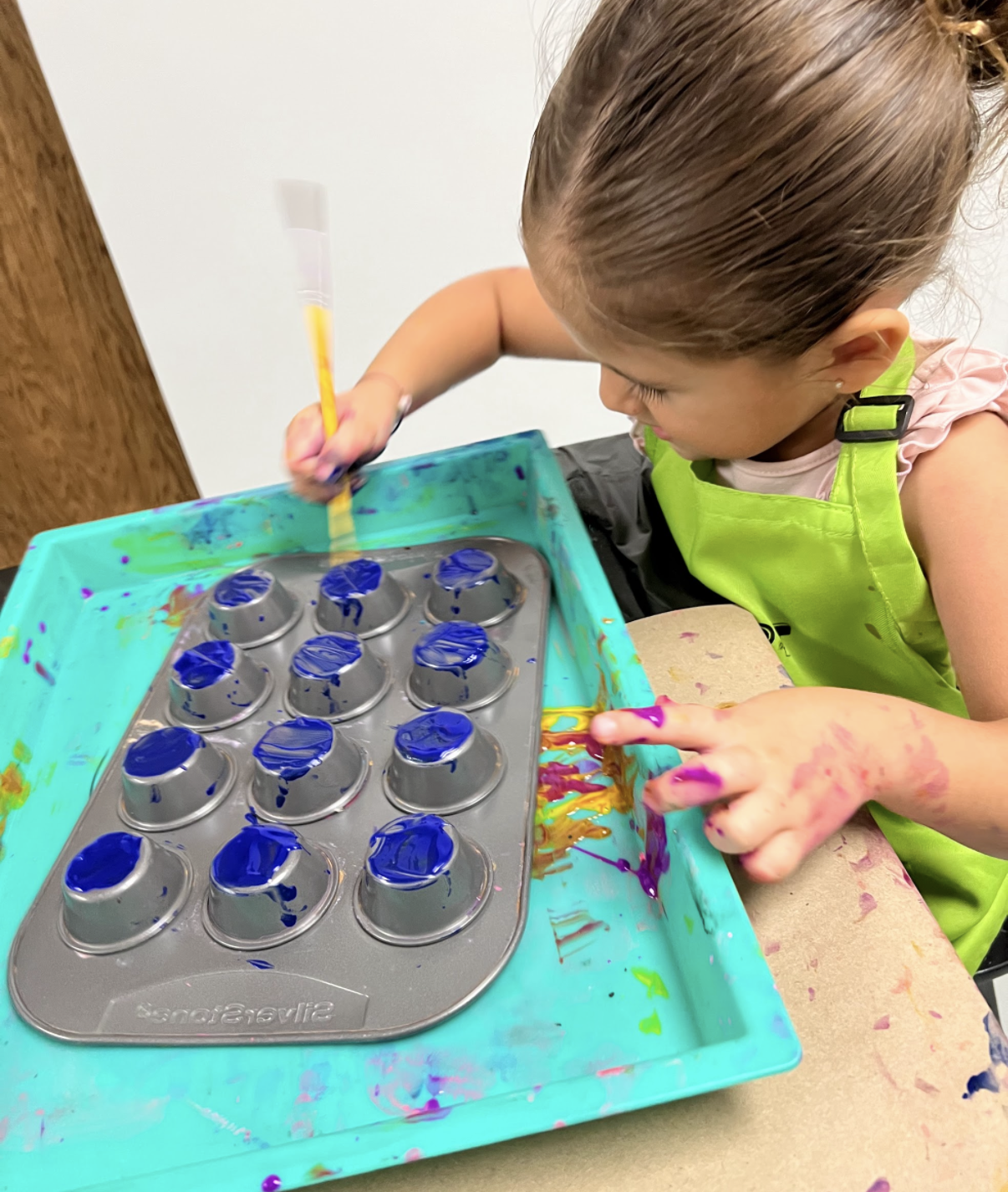
Whisks, spatulas, pastry brushes, and basting brushes all create unique textures that children love exploring.
You can even use a baking pan to make patterns and stamps.
12. Marbles
Place paper inside a shallow box, add a few drops of paint and a marble, then tilt the box to create colorful rolling lines.
13. Combs
Old combs make fantastic repeating lines and textures in wet paint.
14. String or Yarn
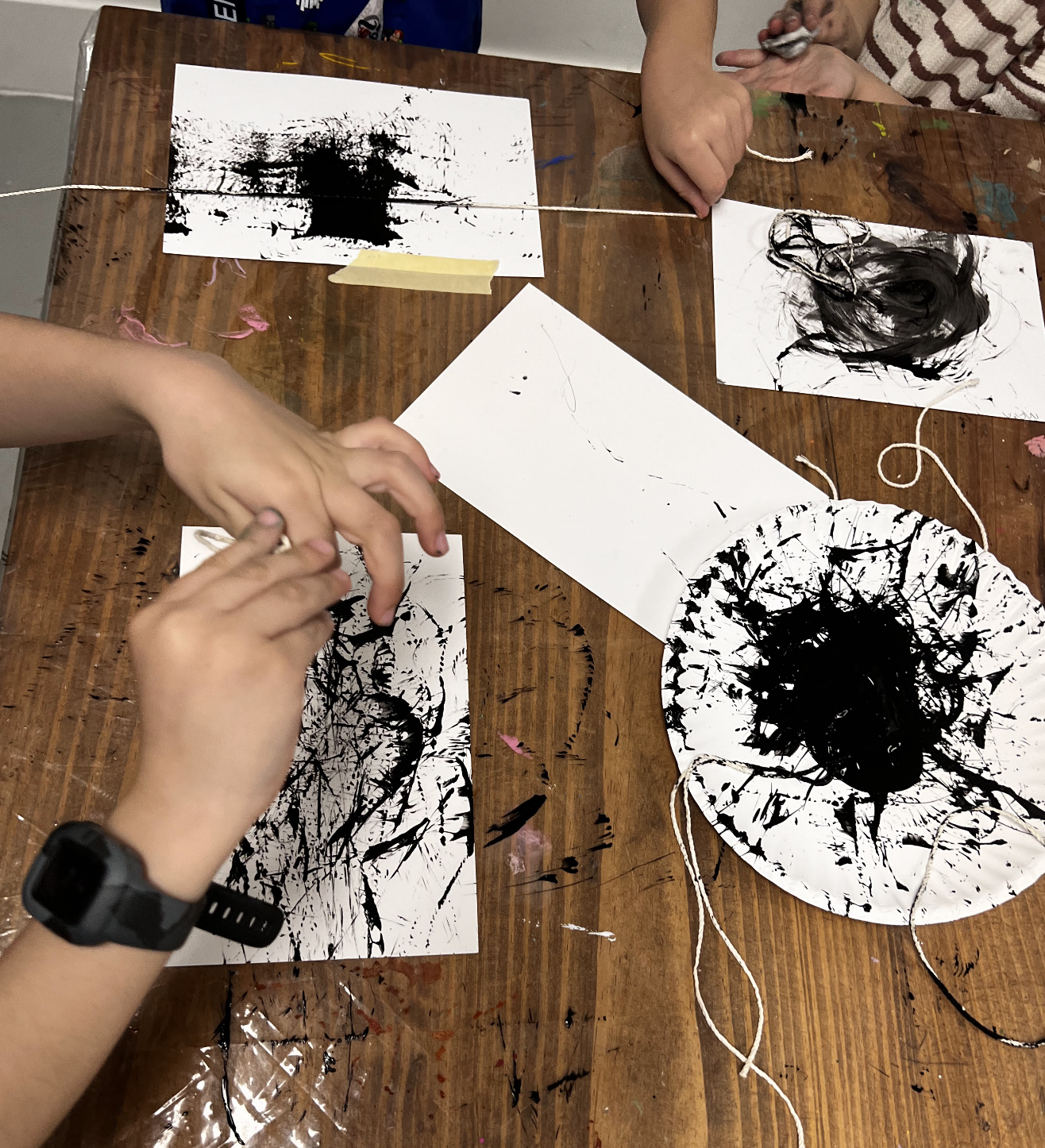
Dip yarn into paint and pull it across the paper for flowing lines and unexpected designs.
15. Hands (and Sometimes Feet!)
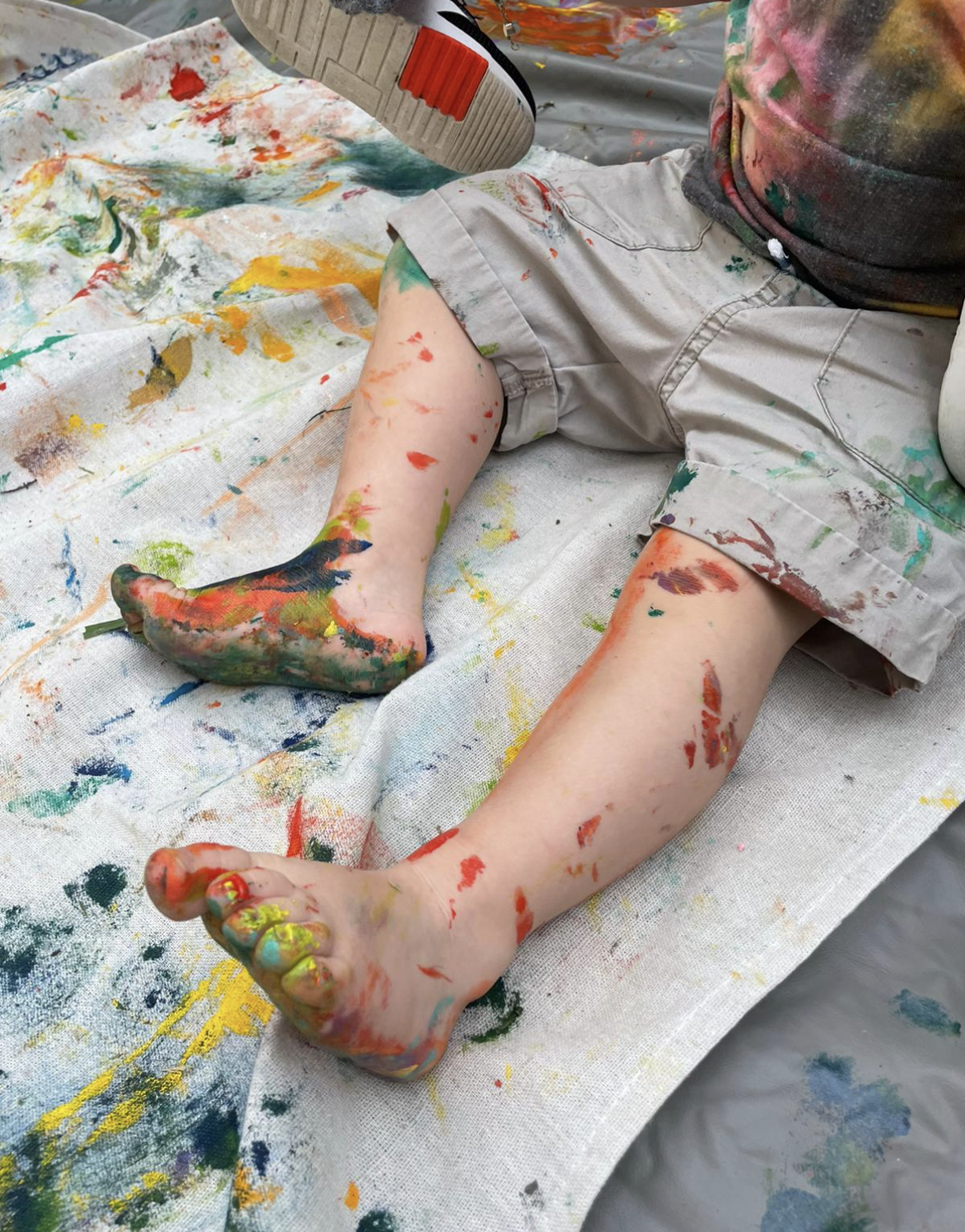
Children's own hands and feet are incredible art tools. Fingerprints, handprints, and footprints allow them to experience paint in a sensory, hands-on way.
Remember: Focus on the Process
When children paint without paintbrushes, the goal isn't to make something that looks perfect.
The magic happens while they explore, experiment, ask questions, solve problems, and discover new possibilities.
Instead of asking, "What are you making?" try asking:
What happens when you roll the car faster?
Which vehicle made your favorite tracks?
How does this tool feel different?
What new patterns do you notice?
These open-ended questions encourage creativity and help children become confident thinkers and creators.
Happy creating!
What unexpected tool will your little artist try first?
Materials We Love
If you'd like to recreate this activity at home, here are a few of our favorite supplies that we use for process art:
Washable Tempera Paint – Easy to clean and available in vibrant colors that are perfect for little artists.
Toy Cars & Monster Trucks – Different tire treads create unique patterns and textures on paper.
Large Roll of Easel Paper – A big surface gives children plenty of room to explore, drive, and create.
Art Trays or Plastic Sensory Trays – Great for containing the paint and making cleanup much easier.
Cookie Cutters - paint or play doh, there are many ways we use this! You will love to have them at home!
These are all supplies we regularly use during our process art activities because they're durable, kid-friendly, and encourage open-ended creativity.
